
Most family trees don’t stall because the records are missing. They stall because of something done in the first week: a guess entered as a fact, a source not written down, or a search started three generations back instead of with yourself.
This guide is the first week done properly. It costs nothing, and every step uses free Australian records.
Quick answer: Start with yourself and work backwards one generation at a time. Write down what you already know, collect the family’s certificates and papers, talk to your oldest relatives, then search free records such as the NSW BDM index and Trove. Record a source for every fact from day one.
Step 1: Start with yourself and work backwards
It sounds too obvious to bother with, but it’s the rule every library guide repeats: work from the present to the past. You know your own details for certain. Your parents’ details are the next most reliable. Each generation back, you lean more on records and less on memory.
Write down, for yourself, each parent and each grandparent:
- Full name, including middle names and maiden names
- Date and place of birth
- Date and place of marriage
- Date and place of death, if applicable
Leave blanks blank. A blank is honest. A guess typed in as a fact is how dead ends are made.
Step 2: Raid the house before the internet
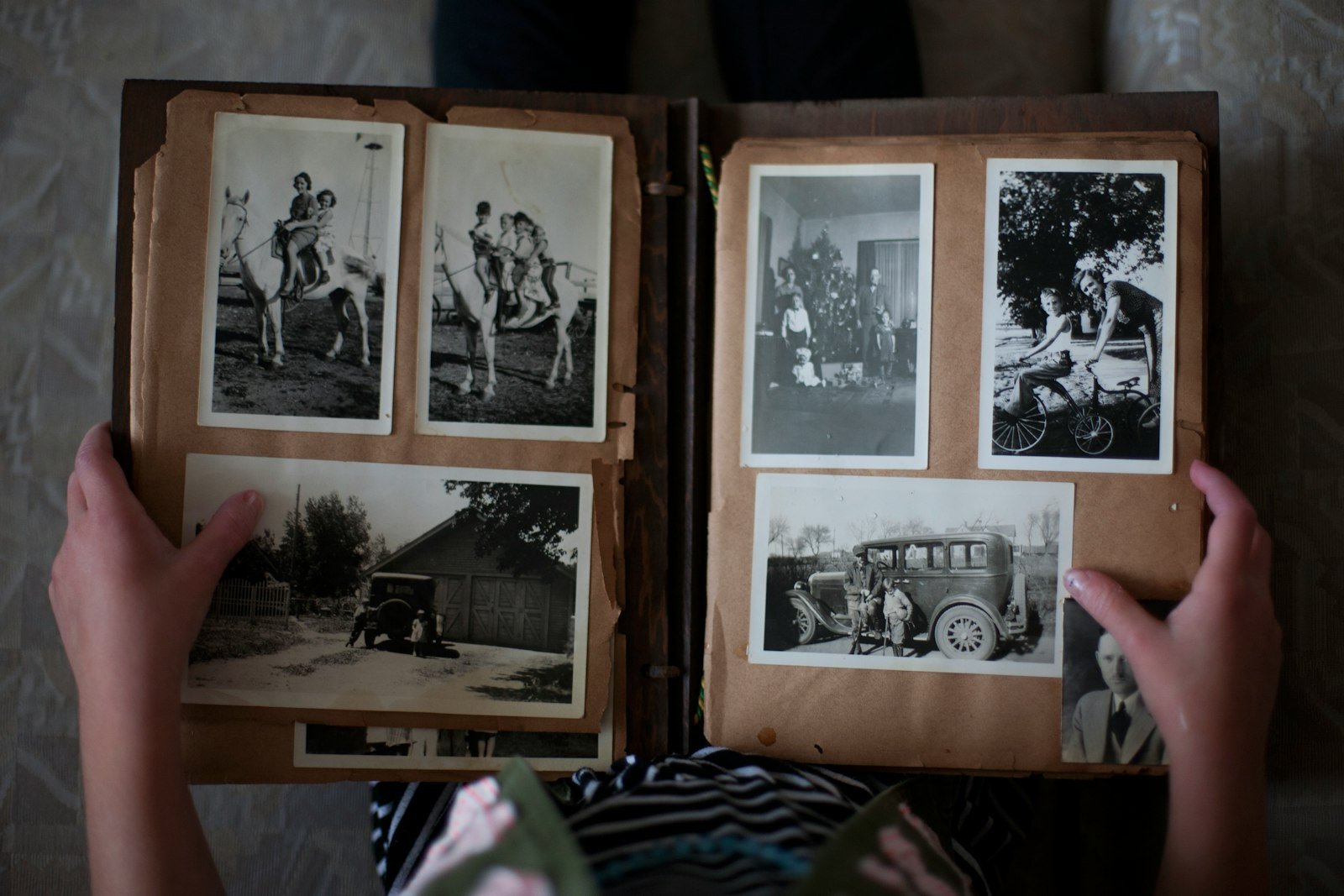
Before you search a single database, look at what your family already holds. Birth, marriage and death certificates, funeral cards, old letters, the back of photos, family Bibles, discharge papers and newspaper clippings all hold names, dates and places.
The most useful items are often the plainest. A funeral card usually gives an exact date of death and age, which narrows a birth year. A marriage certificate can name both sets of parents.
Step 3: Talk to the oldest relatives first
Ask while you can. Older relatives remember names that never made it onto paper: nicknames, a first husband nobody mentions, the town the family “came up from”. Record the conversation if they’re comfortable with it, or take notes straight after.
Treat what you hear as leads, not facts. Memory compresses and rearranges. A story that “Grandad came out after the war” is a lead to check, not a date to enter.
Step 4: Search the free NSW records first
For NSW families, the first stop is the NSW Registry of Births, Deaths and Marriages Family History Search. It’s free and needs no ID for births over 100 years ago, deaths over 30 years ago and marriages over 50 years ago. Other states have their own registries with slightly different date limits.
The index won’t show you the full certificate, but it confirms that an event happened, where it was registered, and usually gives parents’ first names. That’s often enough to take the next step back.
Next, try Trove, the National Library’s free newspaper archive. Birth notices, engagement announcements, funeral notices and obituaries fill gaps the official records leave.
Step 5: Choose where your tree will live
You need one place to keep the tree. The main options are a free FamilySearch account, a paid Ancestry or MyHeritage subscription, or desktop software. Whatever you choose, pick one and stick with it. Trees split across three websites drift apart and contradict each other.
You don’t need to pay for anything in the first month. Get the free records into your tree first, and pay for a subscription later, once you know which gaps you need it for.
Step 6: Write down where every fact came from
This is the habit that separates trees that grow from trees that stall. For every date and place, note the source: “NSW BDM birth index, 1912”, “Funeral card held by Aunt Jean”, “Trove death notice, Sydney Morning Herald”.
Six months from now you’ll hit a conflict: two different birth years, say. With sources noted, you can weigh them. Without sources, you’re stuck guessing which one you trusted and why.
Step 7: Expect your first dead end, and don’t force it
Everyone hits one, usually within the first few generations. A record won’t turn up, a name is spelled four different ways, or an ancestor seems to appear from nowhere. That’s normal, and it’s what this site is for.
When you hit one, resist the urge to grab the closest match and move on. A wrong ancestor attached in a hurry sends the whole branch down someone else’s family. Park it, note what you’ve already searched, and come back with a different record type.
Your first-week checklist
- Write down what you know for three generations, blanks included
- Collect certificates, cards and photos from around the family
- Talk to your oldest living relative
- Search the NSW BDM index for one grandparent
- Search Trove for one family notice
- Choose one home for your tree
- Record a source for every fact you enter
Next: How to search NSW Births, Deaths and Marriages for free walks through a real search, step by step. For every beginner guide in one place, see Start Here.
Sources: NSW Government: Family history search guide · National Library of Australia: Births, deaths and marriages · Museums of History NSW: Family history guide · Trove